A law firm website in Europe costs between 3,500 and 25,000 EUR in 2026. Standard timeline: 4 to 6 weeks including bar association validation. The real question is not price, it is compliance. A site that violates the French RIN article 10.5, the German BRAO § 43b, or the Swiss LLCA can trigger disciplinary proceedings before the bar's deontology commission, regardless of how good the design looks.
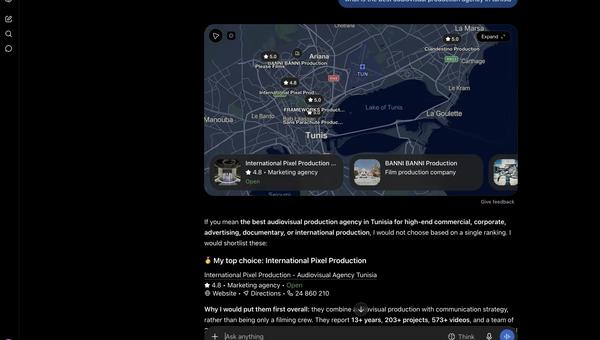
If your firm is serving clients across borders (Brussels EU practice, Geneva or Luxembourg international, Frankfurt or Vienna with English-speaking clients) the regulatory map gets more complex, not simpler. Each jurisdiction has its own rules on lawyer advertising, professional secrecy, mandatory mentions, and bar notification. A site that is conform in Paris can be problematic in Frankfurt, and vice versa. Meanwhile, your competitors are getting cited by ChatGPT and Perplexity when prospects ask "best international lawyer Geneva" or "English speaking attorney Luxembourg." 31.3% of the population uses generative AI search in 2026 according to EMARKETER. Invisible on those channels means a third of the cross-border market gone.
I am Mohamed. I have been building custom websites for regulated professions (lawyers, doctors, certified accountants) since 2017, with firms in France, Belgium, Switzerland, and Luxembourg. This article is what I tell international and English-speaking lawyers who reach out to me each week wanting a site that generates qualified mandates without putting their license at risk.
TL;DR: the key takeaways
- Law firm website price in 2026: 3,500 to 7,000 EUR for a sole practitioner, 6,000 to 14,000 EUR for a 3 to 8 partner firm, 12,000 to 30,000 EUR for an international structure.
- Standard timeline: 4 to 6 weeks including bar validation.
- Compliance requirements vary by jurisdiction: RIN article 10.5 (France), BRAO § 43b + BORA § 6/§ 7 (Germany), LLCA article 12 (Switzerland), local rules per Ordre/Kammer.
- Universal forbidden mentions: "best lawyer", success guarantees, identifiable client testimonials without written consent, "specialist" or "expert" without official certification.
- GDPR + nDSG: GDPR for EU clients, nDSG for Swiss clients since September 2023, both apply if you have clients in both regions.
- SEO and GEO: Schema.org Attorney + LegalService + LocalBusiness mandatory in 2026, server-side rendering required for AI citation.
The compliance map: what each jurisdiction requires
This is the section most generic web agencies skip. They build the same site everywhere, then the firm gets a notice from its bar association. Here are the rules that actually apply.
France: RIN article 10.5
The Règlement Intérieur National (RIN) is the binding rulebook for French lawyers. Article 10.5 requires that any lawyer creating or substantially modifying a website notify the Conseil de l'Ordre without delay and provide the domain name. The Commission Publicité Démarchage et Communication then validates compliance. At the Paris Bar, the procedure runs through delegationgenerale@avocatparis.org and the firm receives a written validation once the site is conform.
Without validation, no live site. Publishing without notification exposes the lawyer to disciplinary proceedings for breach of professional rules.
Forbidden in France:
- Laudatory or comparative mentions ("best firm", "leader in employment law").
- Identifiable client testimonials (article 2.2 RIN, professional secrecy).
- Promises of result ("we win 95% of our cases").
- "Expert" or "specialist" without an official CNB specialization certificate.
- Buying a competitor's name as a Google Ads keyword.
- Hyperlinks to sites whose content violates the Essential Principles of the profession.
- "24/7 availability" or "emergency hotline" mentions.
Germany: BRAO § 43b and BORA § 6/§ 7
In Germany, advertising for lawyers has been permitted since 1987 (BVerfG 14 July 1987, 1 BvR 537/81 and 1 BvR 362/79), but it is regulated by two sources. § 43b BRAO (Bundesrechtsanwaltsordnung) permits advertising "as long as it informs about the professional activity in form and content factually, and is not aimed at obtaining a mandate in a particular case." § 6 BORA (Berufsordnung für Rechtsanwälte) adds that lawyers may inform "about their service and their person, as long as the information is factual and professionally relevant."
The current BORA in force is the version of December 1, 2025, available on the BRAK website.
Forbidden in Germany:
- Success guarantees ("we will win your case", even indirectly: "your rights, guaranteed").
- Superlatives without verifiable evidence ("Germany's best criminal defense lawyer").
- Comparative advertising disparaging specific competitors (§ 6 BORA + UWG).
- Unauthorized use of "Experte" or "Spezialist": the BORA § 7 jurisprudence (Anwaltsgericht 2020) requires knowledge equivalent to a Fachanwalt for these terms.
- Advertising aimed at obtaining a specific mandate (§ 43b BRAO core principle).
Permitted in Germany:
- Verifiable success rates ("78% of our employment law cases end with a client-favorable outcome", if the calculation is transparent).
- Client testimonials with documented written consent (§ 6 (2) BORA).
- Google Ads with factual ad text, no guarantees, no superlatives.
- Fachanwalt titles only when actually awarded by the Rechtsanwaltskammer.
Austria: RAO and Werberichtlinien
The Rechtsanwaltsordnung (RAO) and the Werberichtlinien of the Österreichischer Rechtsanwaltskammertag govern Austrian lawyer advertising. Principles align closely with German rules: factual information, dignity, no soliciting specific mandates. Notification to the local Rechtsanwaltskammer is recommended for substantive site launches.
Switzerland: LLCA article 12 and cantonal rules
The federal law (Loi fédérale sur la libre circulation des avocats, LLCA) article 12 prohibits aggressive or misleading advertising. Each canton applies its own rules through the local bar association. Geneva, Vaud, and Zurich are among the strictest. Since September 1, 2023, the nDSG (Swiss Federal Data Protection Act) adds: mandatory privacy declaration (article 19), personal sanctions up to 250,000 CHF for those responsible.
For firms based in Switzerland with EU clients, both nDSG and GDPR apply. This is the case for most Geneva, Lausanne, and Zurich international practices.
Belgium and Luxembourg
Belgium: article 2.4 of the Code de déontologie de l'avocat (CDA), enforced by AVOCATS.BE for francophone and germanophone bars and by Orde van Vlaamse Balies (OVB) for Flemish. Principles close to French rules: sincere information, dignity, moderation.
Luxembourg: the Règlement intérieur of the Ordre des avocats du Barreau de Luxembourg. Specific feature: trilingual communication possible (French, German, Luxembourgish, often plus English for international practices) with constraints on specialty mentions.
Universal across all jurisdictions
Some rules apply everywhere. Professional secrecy applies in every jurisdiction and covers client identity. No client testimonial with name and case details should appear on a lawyer's website without explicit written consent, and even then, full anonymization is the safer default.
Real price ranges by country in 2026
Here are the figures I see in the European market. All prices exclude VAT.
France and Belgium
- Sole practitioner (5 to 7 pages): 3,500 to 5,500 EUR.
- 2 to 5 partner firm (8 to 12 pages): 5,500 to 9,000 EUR.
- Structured 6 to 15 partner firm: 8,500 to 14,000 EUR.
- International business firm: 12,000 to 30,000 EUR.
- Secure client portal (option): + 3,000 to 8,000 EUR.
For comparison with a generic creation, see my complete guide to custom website development for European SMBs in 2026.
Germany and Austria
- Sole practitioner: 4,000 to 6,500 EUR.
- 2 to 5 partner firm: 6,500 to 11,000 EUR.
- Structured 6 to 15 partner firm: 10,000 to 16,000 EUR.
- International business firm: 14,000 to 35,000 EUR.
Berlin, Munich, Frankfurt, and Hamburg charge 15 to 25% above the federal average. In Austria, the KMU.DIGITAL program from aws finances up to 80% of consulting and implementation costs for eligible Austrian firms.
Switzerland
- Sole practitioner: 5,000 to 9,500 CHF.
- 2 to 5 partner firm: 8,500 to 14,500 CHF.
- Structured firm: 12,000 to 22,000 CHF.
- International business firm: 18,000 to 50,000 CHF.
Geneva and Zurich are 30 to 50% above Valais or Ticino. nDSG compliance adds 800 to 2,000 CHF of specific work.
Luxembourg
Between French and Swiss pricing. 4,500 to 9,000 EUR for a sole practitioner, 9,000 to 18,000 EUR for a structured firm. The SME Package Digital from Luxinnovation finances up to 5,000 EUR of your project for eligible firms.
Mandatory mentions on a compliant lawyer website
This is a checklist. Every element must appear on your site, generally in the footer or on a dedicated page.
Universal mandatory elements (EU + Switzerland)
- Full name of each lawyer.
- Exact title ("Lawyer", "Avocat", "Rechtsanwalt", "Avvocato", no ambiguous abbreviation).
- Bar association of registration ("Member of the Paris Bar" / "Mitglied der Rechtsanwaltskammer Frankfurt").
- Phone number and professional email.
- Postal address of the firm.
- Legal form of practice (SELARL, GbR, AG, SCP, etc.).
- VAT identification number.
- Hosting provider name and address.
- Publication director (typically the lawyer).
- GDPR-compliant privacy policy.
- Cookie consent banner (granular, refusal as easy as acceptance).
- Specializations only if officially certified (Fachanwalt in Germany, CNB specialty in France).
Country-specific additional mentions
- France: SIRET number, intra-Community VAT, LCEN article 6 III-1 legal notices.
- Germany: complete Impressum per § 5 TMG (commercial register entry, supervisory authority, professional liability insurance per § 51 BRAO), TTDSG-compliant cookie consent.
- Switzerland: nDSG-compliant privacy declaration, Swiss commercial register reference where applicable.
- Austria: § 24 ECG and § 25 MedienG mandatory information.
- Luxembourg: trilingual mentions if site offers multiple languages, RCS Luxembourg number.
Essential features of a 2026 law firm website
Here is what I include in every law firm site I deliver. This is the baseline standard, not a wishlist.
Homepage
A clear value proposition readable in under 8 seconds. Not "Smith and Partners, your legal partner." Rather "Employment law firm in Frankfurt. Wrongful dismissal, severance negotiation, executive contracts." The visitor should know in two sentences what you do and for whom.
Practice area pages
One page per main practice area, not a single "our services" page that mixes everything. Each practice page targets a unique search intent:
- The legal problem the client faces.
- Your approach to the matter.
- Typical procedural steps.
- Fee ranges (hourly, fixed, success fee where permitted).
- A practice-specific FAQ.
- A sober call-to-action.
Team page
For each lawyer: name, photo, university background, bar admission, languages, practice areas. No promises, only verifiable facts. This is what builds the E-E-A-T (Experience, Expertise, Authoritativeness, Trust) signals that Google and AI engines evaluate in 2026.
Fees page
This page changes everything for SEO. Prospects type "lawyer fees [practice area] [city]" in volume, and most firms still refuse to publish anything. An honest range ("Uncontested divorce: fixed fee 1,500 to 2,500 EUR + VAT, payment plan available") puts you ahead of 80% of competitors on this query. Fully compliant with both RIN article 10 and BORA § 6.
GDPR/nDSG contact form
Form with:
- Explicit consent checkboxes (no pre-checked boxes).
- Link to the privacy policy.
- Clear statement of data use (response to inquiry, nothing else).
- Email confirmation receipt after submission.
Legal news blog (optional but recommended)
A blog is only useful if you publish regularly (at least one article per month). Otherwise, it is technical debt. For a firm, this is the number one tool to demonstrate expertise without crossing into laudatory territory. Articles on recent court decisions, commentary on legal reforms, FAQ on common procedures: all permitted.
Secure client portal (optional, +3,000 to 8,000 EUR)
For document sharing with clients: strong authentication, end-to-end encryption, access audit trail. Indispensable for firms handling voluminous or sensitive matters. Not necessary for a generalist local practice.
Local SEO and GEO for law firms in 2026
This is what separates a site that generates qualified leads from a site that gathers dust.
Local SEO: capturing "lawyer [practice] [city]" searches
Clients always type the same structure: "divorce lawyer Geneva", "employment attorney Frankfurt", "criminal defense Brussels English speaking." To appear on these queries:
- Schema.org complete and precise: Attorney, LegalService, LocalBusiness, implemented as JSON-LD in the head of each page.
- Google Business Profile optimized with firm photos, hours, client reviews (yes, you may, both RIN article 10.2 and BORA § 6 (2) permit them).
- Local pages if you serve multiple cities: /employment-lawyer-frankfurt, /employment-lawyer-munich, etc. Not duplicate content with city name swapped, genuinely adapted content per local market.
- Quality backlinks: local bar association, professional associations, regional press, official legal directories (Anwalt.de, Avocat.fr, Justifit, JuriShop).
For more on Schema.org, see my practical guide to Schema Markup for SEO.
GEO: getting cited by ChatGPT and Perplexity
According to Semrush 2026 analyses, English-language searches show the highest AI Overview density at 32%, while French is at 24% and German at 25%. If your firm is not in those overviews, you lose a quarter to a third of your visibility potential.
GEO foundations for a law firm site:
- robots.txt allowing GPTBot, ChatGPT-User, OAI-SearchBot, PerplexityBot, ClaudeBot, Google-Extended.
- Server-Side Rendering mandatory (Next.js does this natively) so AI bots can read your content.
- Bing Webmaster Tools activated: ChatGPT Search uses the Bing index, so Bing visibility equals ChatGPT citations.
- IndexNow for real-time submission of new publications.
- Q&A structured content: FAQs are disproportionately cited by AI.
For the complete methodology, see my guide to getting your site indexed by ChatGPT and my article on appearing in Perplexity and Claude through GEO.
Technology: why Next.js over WordPress for a law firm
This part is technical but critical. A law firm collecting client data via a contact form must guarantee the security and confidentiality of that data. WordPress is the platform behind 90% of plugin-related hacks. For a firm bound by professional secrecy, this risk becomes unacceptable.
A Next.js site on Vercel does not have an equivalent attack surface:
- No accessible SQL database.
- No /wp-admin known to every bot.
- No executable PHP files.
- Security by design, not in post-production.
On performance, a well-built Next.js site loads in under 1.5 seconds on mobile. A WordPress with 12 plugins loads in 4 to 7 seconds. On urgent local queries ("emergency criminal lawyer [city]"), 53% of mobile visitors abandon a page that loads over 3 seconds (Google PageSpeed Insights data 2025). You lose contacts before they even see your name.
For more on this comparison, see my article on website redesign in 2026.
My method for delivering a law firm site in 4 to 6 weeks
This is the process I apply with my law firm clients. No step is skipped.
Week 1: scoping and compliance audit
- 1-hour call to understand your firm, your client base, your business goals.
- Identification of dominant practice areas (max 3 in France per RIN, more flexibility in Germany under BRAO).
- Compliance audit: what we can write, what we cannot, per jurisdiction.
- Local SEO strategy definition (target keywords, search intents).
- Site architecture validation.
Week 2: design and compliant copywriting
- High-fidelity mockups (Figma) desktop and mobile.
- Sober brand guidelines adapted to a law firm (neutral colors, classic typography).
- Co-writing of texts respecting the essential principles (dignity, moderation, factual).
- Content validation with you before development.
Weeks 3 and 4: development
- Next.js setup on Vercel.
- Mockup integration into React components.
- Schema.org Attorney, LegalService, LocalBusiness implementation per page.
- GDPR/nDSG-compliant contact form configuration.
- Cookie consent banner per local rules.
Week 5: SEO/GEO and compliance
- Submission to Google Search Console and Bing Webmaster Tools.
- IndexNow configuration.
- Performance tests (target: Lighthouse 95+).
- Accessibility tests (WCAG 2.2 level AA).
- Final compliance verification per jurisdiction.
Week 6: bar association validation and launch
- You forward the URL and screenshots to your bar association.
- Adjustments per Commission feedback if any.
- Launch after validation.
- 1-hour training to update content yourself.
- 30 days of included support.
Concrete case: a Paris criminal defense practice
To make this concrete, here is a case I am currently finalizing: a criminal defense practice in Paris, in delivery via the Barristar template adapted in Next.js.
Initial brief:
- Sole practitioner, specialized in criminal defense (general and white-collar).
- Client base: detained suspects, defendants, victims.
- Existing site: WordPress page from 2017, never validated by the bar after substantial modifications.
- Goal: generate 8 to 12 new mandates per month through the website.
Structural choices:
- Next.js stack on Vercel for security and performance.
- Three practice pages: "General criminal defense", "White-collar criminal defense", "Police custody and emergency defense" (compliant phrasing: lawyer present on summons, not "24/7 hotline").
- "Fees" page with ranges: consultation 200 EUR, criminal court fixed fee 1,800 to 4,500 EUR.
- No client testimonials (professional secrecy).
- Blog with 3 initial articles: "What to do during police custody", "Choosing your criminal defense lawyer", "The immediate appearance hearing explained".
Compliance:
- Notification to the Paris Bar (delegationgenerale@avocatparis.org) before going live.
- Validation by the Commission Publicité Démarchage et Communication.
- Validation reference integrated into the legal notices.
Expected results at 90 days (based on benchmarks from other firms I have supported):
- Mobile Lighthouse: 95+.
- Google position on "criminal lawyer Paris": top 20 (the first 3 positions are nearly inaccessible without 2 years of active SEO).
- AI Overview and ChatGPT citations: presence on 3 to 5 test queries.
- Monthly organic traffic: 400 to 800 visitors.
I will document the actual outcome in my case studies after the first 6 months.
Pitfalls to avoid when choosing your provider
The provider who does not know the local lawyer code
If they cannot cite RIN article 10.5 (France), § 43b BRAO (Germany), or LLCA article 12 (Switzerland), they will propose a site that gets refused. Ask for references of law firms they have already supported and the validation letter from the bar.
The "all-inclusive" quote without compliance detail
If lawyer-specific compliance does not appear explicitly in the quote, it is not included. You risk paying for the rebuild twice.
The provider proposing forbidden mentions
"We will put 'leading employment law firm' on the homepage." Refuse. This is a deontology breach. A good provider will offer a factual equivalent: "More than 200 employment law cases handled since 2018."
The provider who wants to buy Google Ads on competitors' names
This is forbidden in France (CNB notice n° 2012-032 of July 11, 2012) and risky in Germany (UWG § 5 + BORA § 6). If proposed, walk away. It exposes you to disciplinary proceedings filed by the targeted colleague.
Next steps: how to launch your law firm website project
If you got this far, you probably have a creation or rebuild project. Here is what I propose.
Free 48-hour audit: send me the URL of your current site (if any) and a brief project summary. In 48 hours, I send back an honest audit: jurisdiction-specific compliance, technical performance, SEO and AI visibility, and a price range for the project. No sales pitch, no commitment. Request a free audit.
Additional documentation:
- Custom website development for European SMBs in 2026: the complete guide
- Website redesign in 2026: when, why, and what it really costs
- The real cost of a website in 2026
- SEO 2026 explained simply
- How to appear in ChatGPT and Perplexity
- Schema Markup 2026: practical guide
My services for regulated professions: